
A trailer washout is a different job from a trailer wash. The outside is about the company on the door; the inside is about what the next load touches. Food distributors need a reefer that is clean and odour-free before the next pallet goes in. LTL carriers need the spilled drum and the broken pallet dealt with before the trailer goes back out. Haulers need a roll-off that will not contaminate the next load. We do all three at your yard.
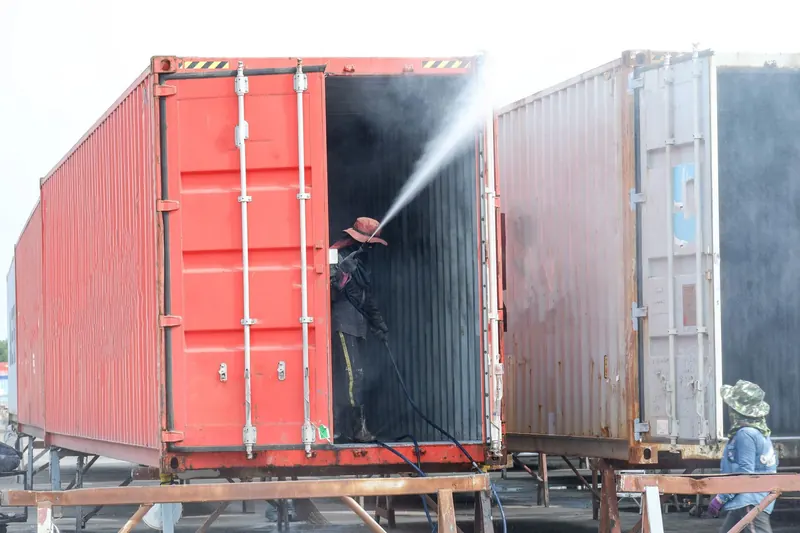
What we wash out
- Dry van trailers
- Reefer trailers and insulated boxes
- Straight trucks and box trucks
- Cargo vans and sprinters
- Roll-off and lugger containers
- Shipping and storage containers
- Dump bodies and end dumps
- Walk-in floors and liftgates
How a washout goes
- Sweep and clear. Loose debris, broken pallet pieces and strapping come out first.
- Apply the right chemistry. A general cleaner for dry vans; a food-safe detergent and a sanitising rinse for reefers and food boxes; a degreaser for roll-offs that have carried oily waste.
- Hot, high-pressure wash of the floor, walls, ceiling, door seals and the e-track or logistics posts where grime collects.
- Rinse, drain and door-open dry. The crew leave the doors open where the yard allows so the trailer dries before it is loaded.
Scheduled or on call
Food and beverage fleets usually put washouts on a cycle: every reefer every two weeks, for example, or every box after a set number of loads. Carriers tend to call as needed: a spill, a smelly trailer, a customer complaint. Both work. Washouts on a route are priced per unit; on-call washouts are priced per unit with a visit charge if we are not already in the area.
The chemistry depends on the load
We ask what the trailer carried, because that decides what we use. Food boxes get food-safe detergent and a sanitiser; a roll-off that hauled shingles gets a heavy-duty degreaser; a trailer with a chemical spill gets a conversation first, because some spills are not a washout job and we will tell you so.
Do you provide a washout certificate or log?
Every washout is logged by unit number, date and time in our system, and we can send you a record for any unit on request. If your customers require a formal washout certificate, tell us what it needs to say and we will provide it with the invoice.
Can you wash out a reefer with the unit running?
We prefer it off and the box at ambient temperature; hot water on a frozen floor is slow and hard on the floor. For a quick turnaround we can work around a pre-cool schedule if you tell us the timing.
Where does the wash water go?
Out of the back doors onto the pad or gravel, away from drains, unless the site requires containment, in which case we bring reclaim mats. Oily roll-off washouts are always contained.