
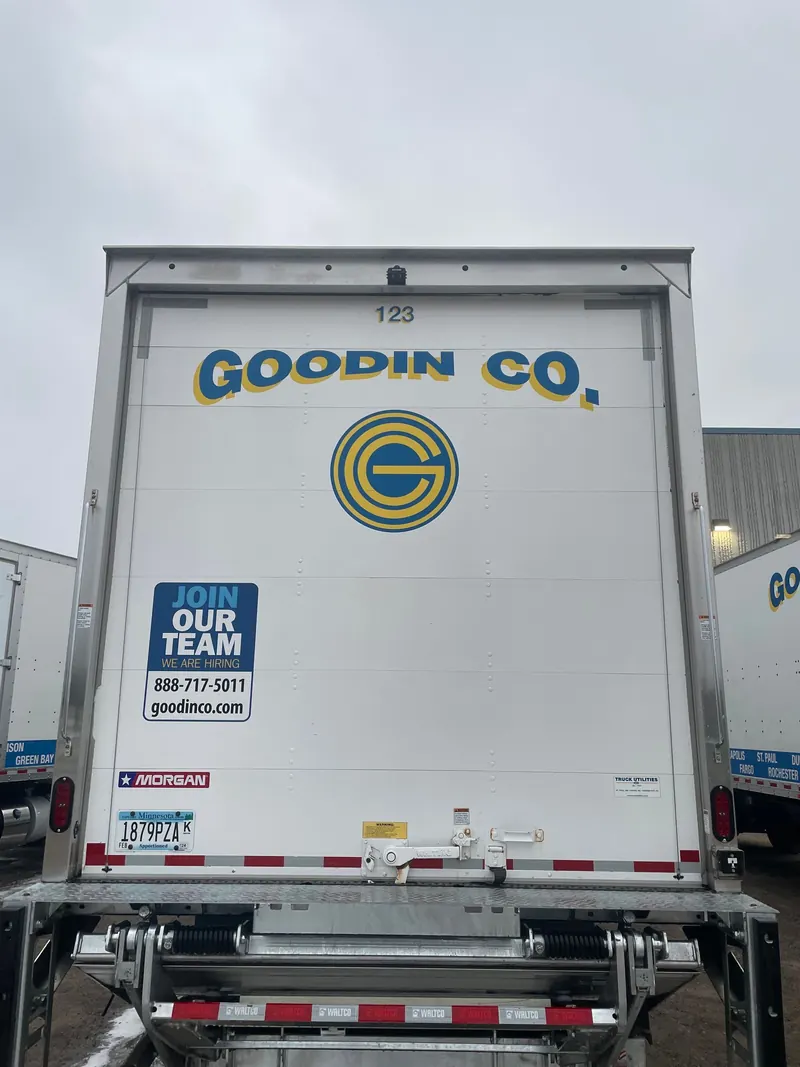
Food and beverage fleets sell twice: once on the road, with a logo on a trailer side, and again at the customer's dock, where the receiver decides whether the box is clean enough to unload. Our distribution customers include bread, dairy, beverage, foodservice and grocery fleets, and their routes carry two jobs: the exterior wash on a cycle and the interior washout on a schedule or on call.
What we do for distribution fleets
- Exterior two-step wash on tractors, reefers, straight trucks and vans, usually weekly in winter and biweekly otherwise.
- Interior washouts with food-safe detergent and a sanitising rinse, on a set cycle or after a specific load. How a washout goes.
- Beverage body and bay cleaning, including the sticky residue in the bays and under the bay doors that attracts wasps in summer.
- Aluminum brightening on rims and tanks for the tractors that pull the branded trailers.
- Logs by unit, which matters when a customer audit asks when a given box was last washed out.
Early mornings and the loading window
Distribution fleets load overnight and roll before dawn, which leaves a narrow window. We wash in the afternoon and evening after the trucks return and before the loaders arrive, and we coordinate with your warehouse lead so a washout is dry before the box is loaded. If a yard is tight we wash in rows as the trucks come in.
Chemistry that is safe around food
Interior washouts on food boxes use food-safe detergents and a sanitising rinse. The exterior two-step uses the same chemistry as any truck, and it does not go inside the box. Reefer units are washed with the unit off and the intake protected.
Do you provide washout records for audits?
Yes. Every washout is logged by unit, date and time, and we can send a record for any unit or a monthly summary for your food safety file.
Our vans park at drivers' homes. Can you still wash them?
If they are in the yard one day a week, we put the route on that day. Washing at private homes is not something we do.