
Hiring a wash company
How to choose a mobile fleet washing company
Most fleet managers hire a wash company once and keep them for years, which is why the first choice matters. These are the questions we would ask if we were hiring one, including the ones we would rather you did not ask us.
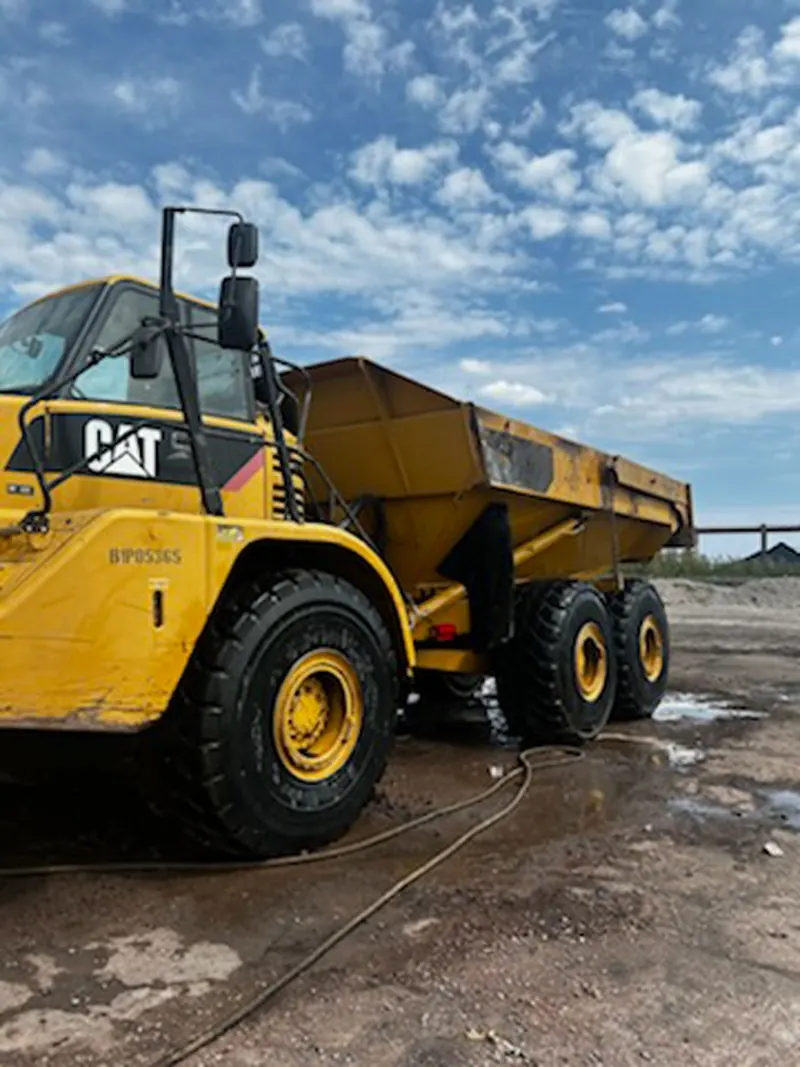
The barrier to entry in mobile washing is a pickup, a pressure washer and a tank, and plenty of companies start exactly that way, including ours. The difference between one that stays a side business and one that can run a hundred-trailer yard weekly through a Northland winter is in the answers to these questions. Ask them all.
1. Do you bring your own water, and is it hot?
Both answers should be yes. A company that needs your hydrant cannot wash a yard that does not have one, and in January a cold-water wash is a rinse that freezes. Ask what temperature the water is at the nozzle; a hot-water pressure washer runs 150 degrees or more.
2. What chemistry do you use, and what do you use on polished aluminum?
The answer should include a two-step process (acid pre-soak, alkaline soap) and a separate aluminum-safe option for polished tanks and rims. If the answer is "soap," your aluminum will go grey. If the answer does not mention polished aluminum at all, your polished aluminum will be etched. The two-step, explained.
3. Brushes or brushless?
Brushless, for a fleet with paint, decals or aluminum worth keeping. Brushes drag grit across the surface. A good company will use a brush deliberately on a specific spot, by hand, and nowhere else.
4. How do you know which units were washed?
This is the question that sorts companies. The answer should be a log by unit number, with the time, kept by the crew at the stop, not reconstructed in the office later. If the answer is "we wash everything in the yard," ask how the invoice is built and what happens when half the trailers are out.
5. Who checks the work?
Someone other than the person who did it. Ask whether washes are inspected, how often, against what list, and what happens when a wash fails. Quality on a route drifts after the first month unless someone is measuring it.
6. How is it priced, and what happens when a truck is out?
Per unit, by unit type and frequency, with add-ons priced per unit, and no charge for units that were not there. Be wary of flat monthly prices: they are simple, and they mean you pay for washes that did not happen. What fleet washing costs.
7. Are you insured, and can I have a certificate?
Yes, and yes, with your entity as the certificate holder. A company that hesitates on this is not insured.
8. Where does the water go in my yard?
The right answer starts with "let me look at the yard." The company should know the difference between a storm drain and a sanitary one, carry reclaim mats and a vacuum, and be willing to tell you that your yard needs containment even if it costs them the job. Wash water and the rules.
9. When do you wash, and what happens when a route day is missed?
Nights, weekends, around your dispatch, on the same day each cycle. And a plain answer about missed days: weather happens, trucks break, and the question is whether you are told that night and the yard is made up within the cycle.
10. Who will be in my yard?
Employees, trained, with a lead on each truck, and the same crew on your route most weeks so they learn the yard. Ask how access notes, gate codes and site rules are recorded, and whether a new crew member would have them on the first night.
11. Can you handle my site's requirements?
Aluminum-safe only, reclaim required, badge access, no chemicals indoors, lift gates up, only listed units, lock the gate. A company that runs public yards and terminals will have a place these rules live. One that does not will forget them by the third visit.
12. What does a reference yard look like?
Ask for a fleet like yours that they have washed for more than a year, and go look at it, ideally the morning after a route night. Trailers' rear doors, rims, mudflaps and the lower panels are where washes get missed. If those are right on a yard that has been on the route for a year, the rest will be.
The question for us
We would rather you asked all twelve than none, because the companies that answer them well are the ones fleets keep. Ours are here; the yards are ours to show you.
Should I get more than one quote?
Yes, and compare them per unit by frequency, not as monthly totals. Then weigh the answers to questions 4, 5 and 8, which are where the quotes that look cheap tend to fall down.