
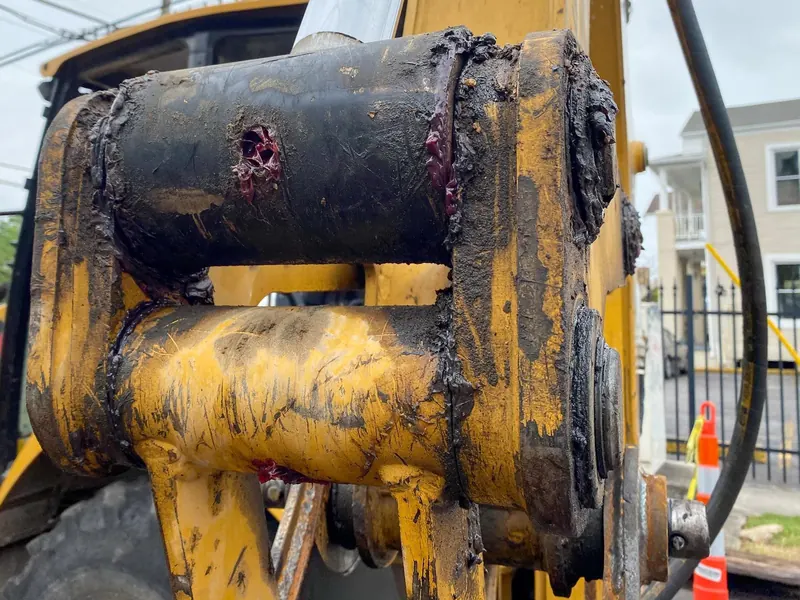
Degreasing is the part of a wash that the regular two-step is not designed for. Engine bays, fifth-wheel plates, bucket pins, hydraulic cylinders, the belly of a packer where the hydraulics weep: oil and grease there has mixed with road dust into a layer that soap will not cut. We do it with an alkaline degreaser, dwell time and hot water, either as an add-on to a route wash or as a standalone visit before a service or a sale.
What we degrease
- Truck and bus engine bays
- Fifth-wheel plates and the frame around them
- Transmission and differential housings
- Packer bodies, hoppers and hydraulic bays on refuse trucks
- Pins, bushings and cylinders on loaders and excavators
- Engine compartments on plant and generators
- Shop floors and wash pads (quoted)
- Tanks and pumps on service trucks
How we do it
- Protect what should stay dry. Open intakes, the alternator and exposed electronics get covered or worked around. Tell us about anything sensitive on the unit.
- Apply the degreaser and let it work. An alkaline degreaser on the greased areas, with a few minutes of dwell. Hot water on its own just moves grease; the chemistry breaks it.
- Agitate the heavy build-up. On pins and plates with years of grease we use a brush or scraper first, because no pressure washer removes a quarter-inch of cured grease in one pass.
- Hot, high-pressure rinse. The emulsified grease rinses off. On an engine bay we rinse from above and keep the pressure moderate around wiring.
Why fleets book degreasing
- Before a service. A mechanic can find a leak on a clean engine in a minute. On a greased one, it is a guess.
- Before an inspection. Oil-soaked brake components and leaking hubs are violations. Clean ones are not.
- Before a sale or a lease return. A clean engine bay is the single biggest signal to a buyer that the truck was looked after.
- For the people who work on it. Nobody should have to lie in grease to do a brake job.
Where the water goes
Degreasing produces oily water, and oily water cannot go to a storm drain. We degrease over a reclaim mat with vacuum recovery where the site requires it, and always away from drains and ditches. More on reclaim and the rules.
Is it safe to pressure wash an engine bay?
With care, yes. We keep the pressure down around the harness and connectors, cover intakes and the alternator, and never aim at the ECM. Modern engines are sealed well; the risk is a careless wand, not the water.
How long does it take?
An engine bay on a tractor is 15 to 30 minutes on top of the wash. A loader with years of grease on the pins is an hour or more, and we quote it hourly.