
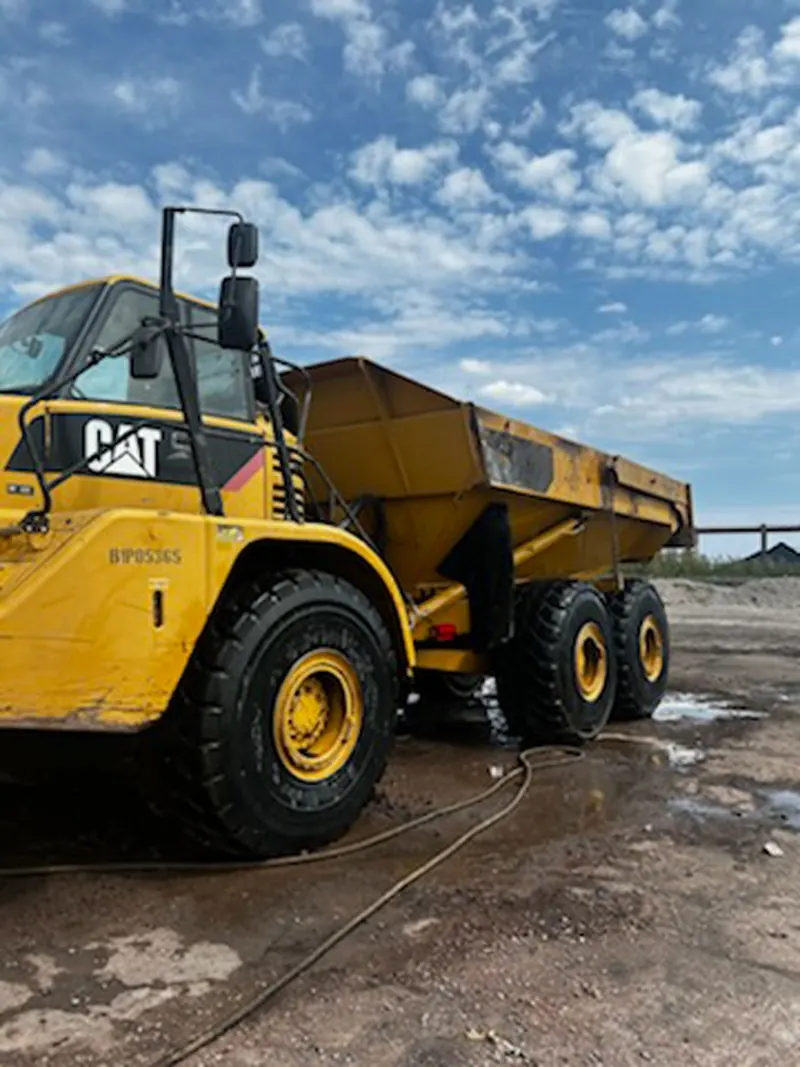
Heavy equipment collects what it works in. Taconite dust on the Range, clay and limestone in the pits, asphalt around the plants, hydraulic weep on everything. Left on, it hides leaks, bakes onto the undercarriage, and makes a machine worth less the day you decide to sell it. We wash it off where the machine sits, with hot water and the pressure to move caked material without a chisel.
What we wash
- Wheel loaders and track loaders
- Excavators and mini excavators
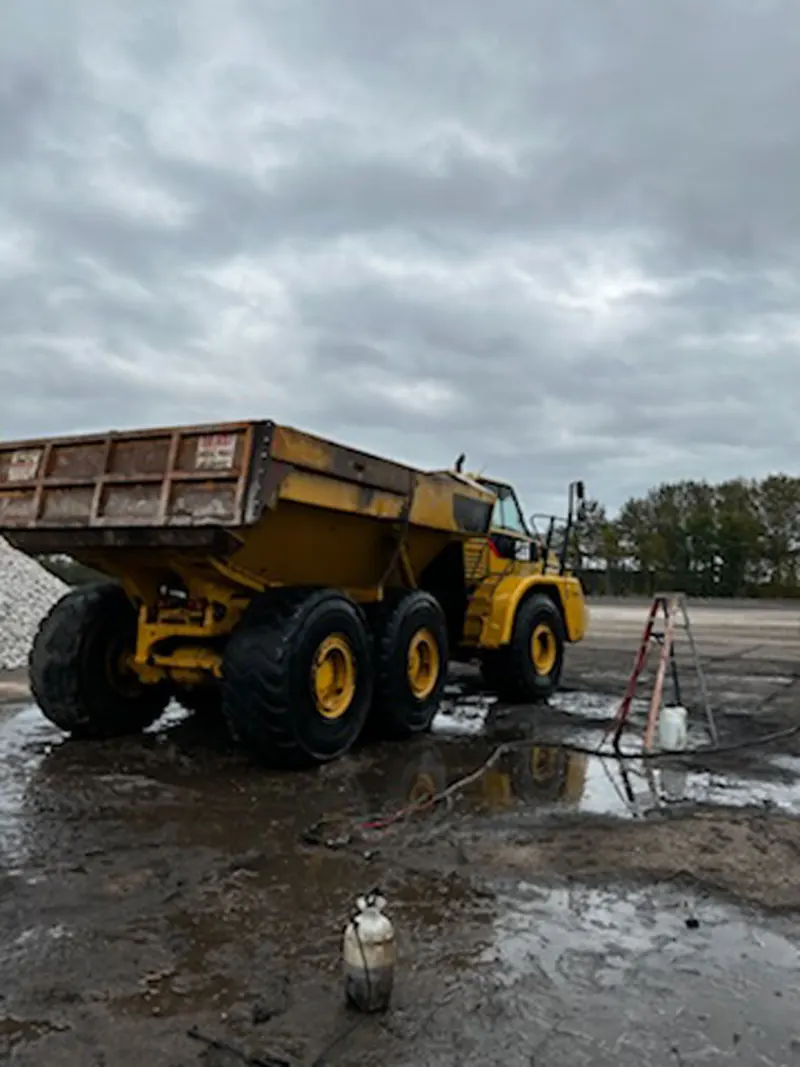
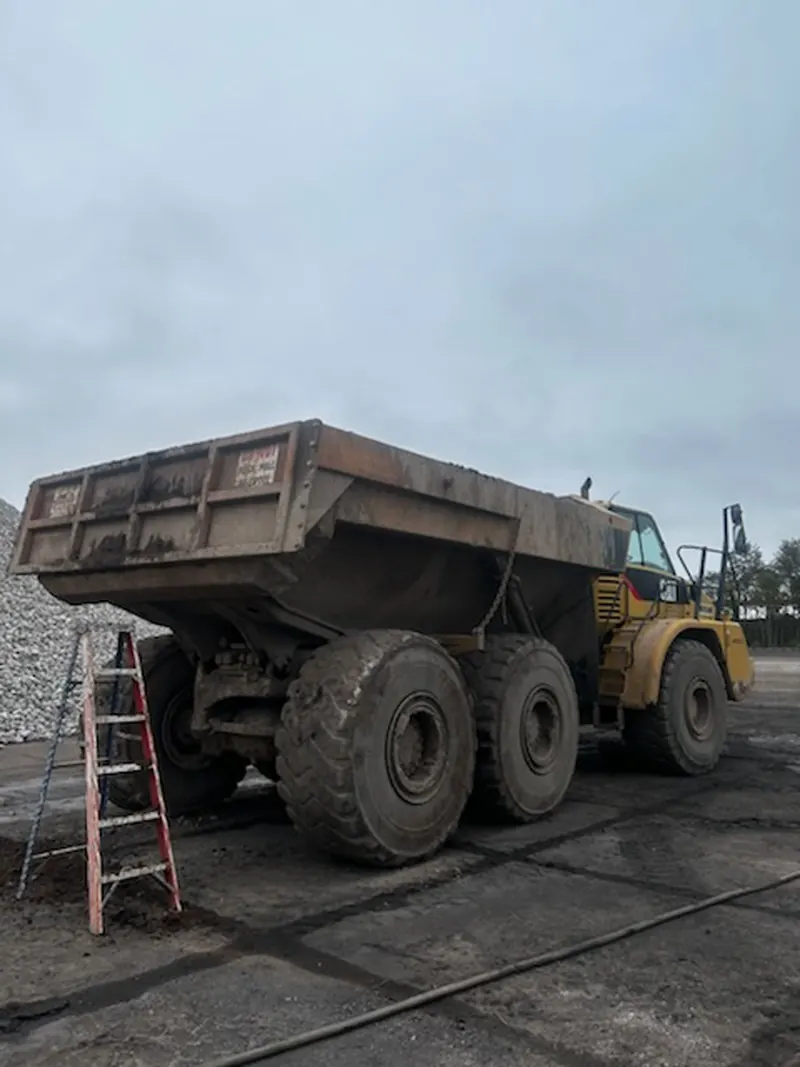
- Articulated and rigid haul trucks
- Dozers, graders and scrapers
- Skid steers and compact track loaders
- Rollers, pavers and milling machines
- Telehandlers and forklifts
- Cranes and boom trucks
- Agricultural tractors and implements
- Lowboys and the tractors that pull them
How a heavy equipment wash goes
- Knock-down. Hot, high-pressure water takes the bulk material off the tracks, belly pans, bucket and body. On a machine coming out of the pit this is most of the work.
- Degrease. An alkaline degreaser on the engine bay, pins, cylinders and anywhere oil has mixed with dust. How we degrease.
- Two-step wash. The same acid and soap process we use on trucks, for the paint, glass and cab.
- Rinse and walk-around. The crew check the belly pans, steps and glass before they call it done, and log the machine by its unit number.
When fleets book it
- Before a service interval, so the mechanic can see what is leaking and what is not.
- Before an auction, a trade or a photo listing. A clean machine photographs like a maintained one.
- Before a move between sites, where a muddy undercarriage on a lowboy becomes a road hazard and a ticket.
- On a route, monthly or quarterly, for the yard loaders and plant that never leave.
Pricing
Heavy equipment is quoted per machine or by the hour, depending on the state it arrives in. A yard loader on a monthly route is a fixed per-unit price; a 40-ton excavator coming out of a clay pit for the first time in a year is hourly, and we will tell you roughly how long before we start. Either way it goes on the same weekly invoice as the trucks.
Water, mud and where it goes
Washing equipment moves a lot of material. We wash on your pad, gravel or a spot you choose, away from storm drains. Where a site needs the water contained, we bring reclaim mats and a vacuum recovery system and take it with us. If you are not sure what your site requires, we have done this across enough quarries, plants and public works yards to help you work it out. More on wash water and stormwater rules.
Can you wash equipment on a job site, not just in the yard?
Yes. The wash trucks are self-contained, so a gravel pit, a pad at a plant or a staging area off a county road all work. We need room to park the truck within hose reach of the machine, roughly 100 feet.
Do you wash the engine bay?
Yes, as part of degreasing, with care around the alternator, ECM and open intakes. Tell us if a machine has known electrical sensitivities and we will work around them.
Is hot water really necessary?
For hydraulic oil, asphalt and grease, yes. Cold water pushes them around; hot water and the right degreaser take them off. Every one of our pressure washers is a hot-water unit.