
Winter and corrosion
What road salt and brine actually do to a truck
The white crust on a frame rail in February is not just ugly. It is an electrolyte, it is still wet underneath, and it is working on the steel every day it is left there. Here is the chemistry in plain terms, and what to do about it.
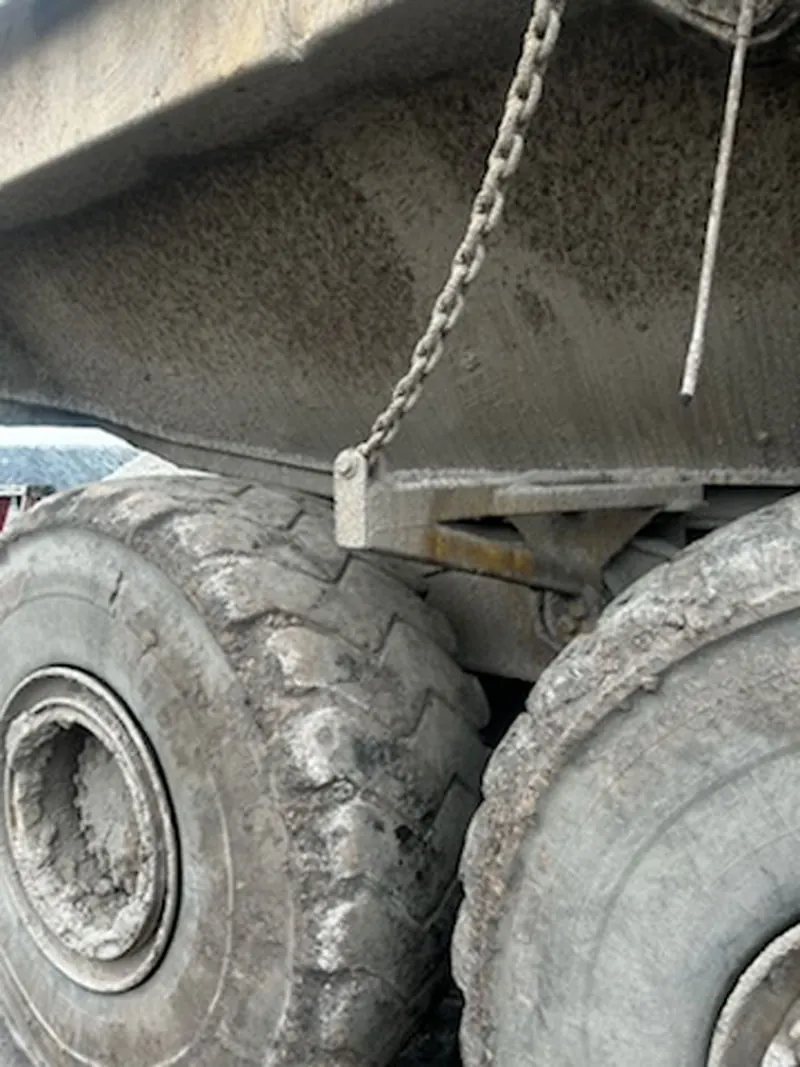
Minnesota has used rock salt on roads for decades. What changed in the last fifteen years is salt brine: a liquid solution of sodium, magnesium or calcium chloride that MnDOT and the counties spray on highways before a storm so the snow cannot bond to the pavement. It works well for the roads. It is considerably worse for the trucks that drive on them, and the reason is worth understanding if you own a fleet.
Rock salt vs. brine
Rock salt is a solid. It is thrown by tires onto a truck's underside, where most of it bounces off or sits as dry crystals until it rains. It only corrodes when it is wet. Brine is applied as a liquid, atomised by every tire that drives through it, and coats every surface under a truck as a fine mist that dries to a film. That film is made of chlorides that are hygroscopic: they draw moisture out of the air. At humidity levels that are normal in a Lake Superior winter, a brine film on a frame rail stays damp, and damp chloride on steel is a battery.
What corrosion is, briefly
Rust is steel giving up electrons to oxygen. For that to happen fast you need an electrolyte, a conductive liquid, touching the metal. Pure water is a poor electrolyte. Salt water is an excellent one, and magnesium and calcium chloride solutions are better still. A brine film is a thin, persistent, highly conductive electrolyte on exactly the parts of the truck that are hardest to see and most expensive to replace. It also wicks into seams, crimps and under coatings, where it does its work out of sight.
What goes first
- Brake lines, air tanks and valves. Steel lines and tank fittings are thin, often unpainted and sit low. Corroded brake components are among the most common out-of-service violations in roadside inspections.
- Frame rails and crossmembers. Scale on the inside of a frame rail is the kind of damage that shows up as a crack years later.
- Electrical. ABS harnesses along a trailer frame, the seven-way plug, lighting connectors. Chloride creeps into the crimps and the first symptom is an ABS light or a dead marker lamp.
- Trailer landing gear and sliders. Unpainted, exposed and rarely cleaned. A slider that will not release is often just corrosion.
- Aluminum. Aluminum does not rust, but chlorides oxidise it to the grey chalk that makes polished rims and tanks look old. It also pits where aluminum meets steel.
- Steps, battery boxes, fuel tank straps. Everything low and welded.
Why a cold-water rinse is not enough
Cold water dissolves some of the chloride and leaves the rest, particularly where the brine has mixed with road grime into a paste. Hot water dissolves chlorides far faster and softens the paste. An acidic pre-soak, the first step of a two-step wash, lifts the mineral film off the metal so the rinse can carry it away. The combination, hot water with a two-step and a wand that reaches inside the frame, is what actually removes brine. A drive-through with cold water and a flood bar on the floor removes some of what is directly above the bar.
What a winter wash program does
The variable you control is time: how long chloride stays wet on the steel between washes. A weekly hot-water undercarriage rinse through salt season keeps it to a week; a monthly one leaves it there for three weeks of every four. Fleets that run weekly with undercarriage from first snow to the thaw keep frames, brake systems and harnesses in service years longer than fleets that wash in April. Undercarriage washing.
Five things that help beyond washing
- Park trailers with the doors away from the road where you can. Spray from passing traffic is a surprising share of what ends up on the back doors.
- Keep the drain holes in the frame open. Brine that pools inside a rail does the most damage.
- Dielectric grease on connectors at the fall PM, before the salt starts.
- Touch up chipped paint on the frame before winter. Bare steel under brine corrodes many times faster than coated steel.
- Brighten the aluminum in spring, once the salt is done. Oxidation left for a summer gets harder to remove.
Does undercoating stop brine corrosion?
It slows it, as long as the coating is intact. Brine wicks under chipped or cracked coatings and corrodes faster there because the metal stays wet. A coated frame still needs to be rinsed.
Is brine worse for aluminum trailers?
Aluminum does not rust, but it oxidises and pits under chlorides, and the steel fasteners and crossmembers on an aluminum trailer corrode where the two metals touch. The landing gear and slider are steel regardless.