
How we wash
The two-step truck wash, explained
Every fleet wash company says "two-step." Few explain it. Here is what each step does, why the order matters, and why a wash that never touches the truck with a brush gets it cleaner.
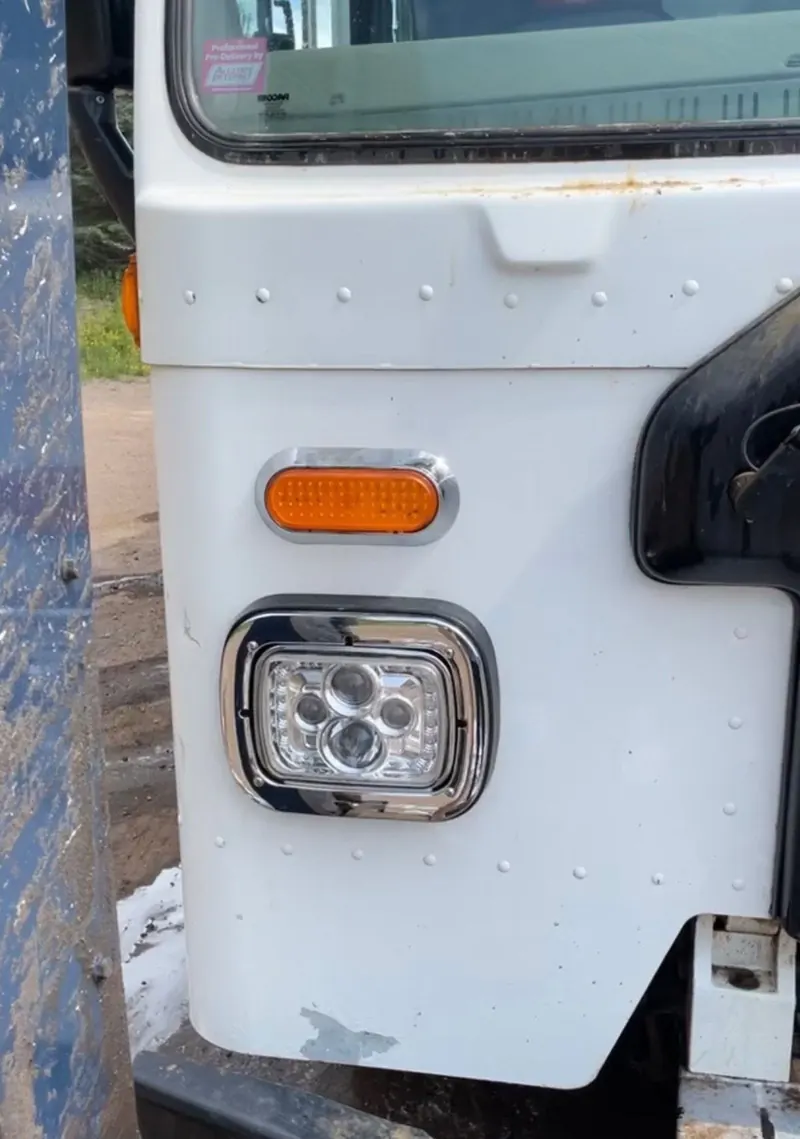
A truck's dirt is two kinds of dirt. One kind is mineral: road salt, brine, the grey oxide haze on aluminum, concrete dust, the white streaks down a trailer side. The other is organic: diesel soot, road tar, grease, bugs, the brown film that builds on the lower panels. No single chemical removes both well, which is the whole reason the two-step exists. Each step takes one kind, and the order is not arbitrary.
Step one: the acid pre-soak
A low-pressure application of a mild acidic solution, usually built on hydrofluoric or phosphoric acid in a fleet wash product, over the whole unit. Its job is the mineral dirt: it dissolves the chloride film from brine, lifts the oxide layer off aluminum, and breaks the bond between the road film and the paint. It dwells for a minute or two but is never allowed to dry on the surface. On a trailer that has run I-35 all winter, this step is what makes the difference between clean and merely rinsed.
Step two: the alkaline soap
A high-foaming alkaline detergent applied over the acid. Two things happen. The alkaline neutralises the acid, which is important both for the truck (acid left to its own devices etches aluminum and dulls paint) and for the rinse water. And the detergent emulsifies the organic dirt: the soot, the tar, the grease, the film, which it lifts off the surface so it can be rinsed away. The reaction between the two steps also makes the foam work harder than either would alone, which is why a two-step cleans without scrubbing.
The rinse: hot and high pressure
Hot water, 150 to 180 degrees at the nozzle, at pressure, rinses the emulsified dirt and the neutralised chemistry off, top to bottom. Hot water is not optional. It dissolves chlorides far faster than cold, softens tar and grease, and evaporates quickly enough in winter that a truck does not leave the yard as an ice sculpture. All of our pressure washers are hot-water units for that reason.
Why no brushes
A brush drags whatever grit is on the truck across the paint. On dark paint that is swirl marks within a season; on vinyl decals and reflective tape it is lifted edges; on polished aluminum it is scratches that no brightening will fix. A properly done two-step does the work chemically, so the only thing that touches the truck is water. The exceptions are the places chemistry cannot reach alone: years of cured grease on a pin, baked-on tar on a bumper. Those get a brush or a scraper deliberately, by hand, on that spot.
What the two-step does not do
- It does not brighten neglected aluminum. The pre-soak is mild. Aluminum that has gone grey over a year needs a dedicated brightening with a stronger acid, applied piece by piece.
- It does not degrease. Engine bays, fifth wheels and hydraulic bays need an alkaline degreaser and dwell time. Degreasing is its own job.
- It is not for polished aluminum. Mirror-polished tanks and rims etch under the standard pre-soak. Polished fleets go on aluminum-safe chemistry for the whole wash, which is why we ask about the finish before the first visit.
Why it matters who does it
The two-step is simple to describe and easy to do badly. Acid left to dry etches aluminum. Too much acid on a polished barrel ruins it. Soap applied before the acid has worked wastes both. A crew that does it every night on a route knows the dwell times by feel, in July and in January. That is most of what you are paying for.
Is the acid dangerous to the truck or the yard?
Not when it is applied diluted, kept wet and neutralised by the soap within minutes, which is the process. The crew wear the right protection and the yard is rinsed. Neutralised two-step rinse water is mild; the concern for storm drains is the dirt and oil it carries, not the chemistry.
Can a two-step be done with cold water?
It can be done, but not well in winter. Cold water rinses chlorides slowly, leaves tar and grease, and freezes on contact below about 15 degrees. Hot water is the difference between a wash and a rinse.