
Compliance
Wash water, reclaim and the stormwater rules
Wash water that carries oil, grease and dirt cannot go down a storm drain. That is the rule in every state, and the question for a fleet is what it means for your yard. Here is the practical version.
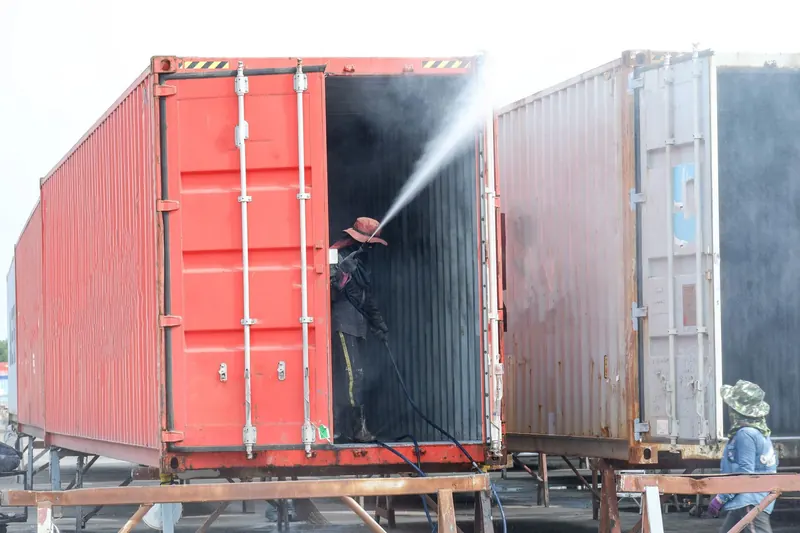
Storm drains go to the lake, the river or the creek, untreated. That single fact is behind every wash water rule. Water that has washed a truck carries oil, grease, heavy metals from brake dust, detergent and dirt, and in Minnesota and Wisconsin, as everywhere in the country under the federal Clean Water Act, it is not allowed into a storm drain. Sanitary sewers, which go to a treatment plant, are a different matter and usually the right place for it, subject to the local utility's rules.
This article is practical guidance from a wash company, not legal advice. The Minnesota Pollution Control Agency, the Wisconsin DNR and your city's stormwater program are the authorities for your site. If a site has an industrial stormwater permit, the permit says what applies.
Three kinds of yard
- A yard with a wash pad. A concrete pad draining to a sanitary connection, usually through an oil-water separator. This is the ideal case: wash on the pad, and the water goes where it should. Many public works yards, dealers and larger carriers have one.
- A gravel or dirt yard with no drain nearby. The common case in the Northland. Wash water soaks into the ground, which is generally acceptable for exterior truck washing with neutralised detergents, as long as there is no storm inlet, ditch or waterway it can reach. This is where most of our routes run.
- A paved yard with storm inlets. The case that needs attention. Water from a wash will run to the nearest inlet, and that is a discharge. Those yards need containment.
When reclaim is required
Containment is the right answer whenever the water would otherwise reach a storm inlet or a waterway, and always for the dirtier jobs regardless of the yard: degreasing, hopper and roll-off washouts, and equipment coming out of a pit. Some sites also require it as a matter of policy or under their permit; a refinery, a mine contractor's yard and a municipal shop often do. We ask at the quote stage and the answer goes on the yard sheet.
How mobile reclaim works
Reclaim on a mobile wash is a mat and a vacuum. The unit is parked on a bermed mat, large enough to catch the spray; the wash water pools on the mat; and a vacuum recovery unit pulls it into a tank on the wash truck. It then goes to a legal disposal point, typically a sanitary connection or a treatment facility, rather than onto the yard. It adds time and is usually priced as a per-visit charge, which is why we only recommend it where it is needed.
What is in neutralised wash water
A properly done two-step wash neutralises the acid with the alkaline soap, so the water leaving the truck is close to neutral pH. The environmental concern is what it carries, not the chemistry: oil, grease and metals. That is why an exterior wash on gravel is treated differently from a degrease, where the water is visibly oily and always contained.
Questions to ask any mobile wash company
- Where will the water go in my yard, and will you look at the yard before you answer?
- Do you carry reclaim mats and vacuum recovery, and what does it cost per visit?
- What do you do with recovered water?
- Are your detergents neutralised before rinse, and what do you use for washouts?
- Will you tell me if my yard has a problem, even if it costs you the job?
The last one matters most. A wash company that hoses down trucks next to a storm inlet because the customer did not ask is a liability to the customer, not to itself.
Can wash water go into a ditch at the edge of the yard?
A roadside ditch usually drains to a culvert and a creek, which makes it a storm conveyance. Treat it like a storm drain: keep the wash away from it or contain the water.
Do I need a permit to have my fleet washed in my yard?
Generally not for the washing itself on a gravel yard with no discharge. A site that already holds an industrial stormwater permit must follow what the permit says about vehicle washing. When in doubt, ask the MPCA or the DNR; they would rather answer the question than issue the notice.