
Refuse
Why refuse fleets need a wash program, not a wash
A packer is the dirtiest vehicle on the road by design and the one the whole town sees every week. Keeping it clean is not a matter of washing it harder; it is a matter of washing it every week, the same way.
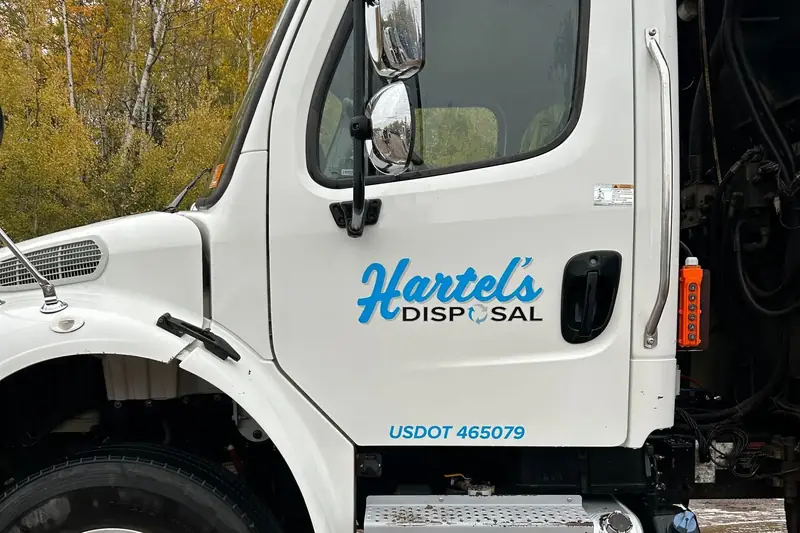
Haulers were among the first fleets we washed and they are still the ones we see most. A refuse truck is a hard case: the body carries leachate and residue that soap does not touch, the hydraulics weep onto the frame and the undercarriage, the arms and forks on a front loader collect what every dumpster drops, and the truck runs through brine all winter carrying more weight than anything else on the road. And it does all of this on the same residential streets at the same time every week, in front of the people whose bill it is.
Why a single wash does not last
Residue builds daily. A packer washed on Monday looks fine Tuesday, acceptable Thursday and like a garbage truck by the following Monday. The smell follows the same curve. A monthly wash means the truck looks the way you want it for a week out of four. A weekly wash, done overnight so the truck goes out clean in the morning, means it looks that way every day the public sees it. Nearly every refuse fleet we wash is on a weekly route for that reason.
What a refuse wash has to include
- The cab and body exterior, with a two-step wash that takes the tar off the lower panels and brightens the aluminum.
- The hopper and tailgate, with a degreaser and hot water. This is where the residue and the smell are, and it is the step a general wash skips.
- The packer blade, cylinders and hydraulic bay, degreased so the leaks are visible and the mechanic is not working in it.
- The arms, forks or automated arm on front and side loaders.
- The undercarriage, through winter. A loaded packer puts more stress on its frame than any other unit and sits in brine all day; frames go first on refuse trucks.
Odor
Degreasing the hopper does most of it. For the rest we use a degreaser with an odor neutraliser on the body and hopper, which is why a packer leaves the yard smelling like a wash. Washing the containers that come back to the yard, especially the front-load dumpsters that have been at a restaurant all summer, removes the other source.
Where the water has to go
Hopper washout water is not storm-drain water: it carries organics, oil and whatever was in the truck. Many hauler yards have a wash pad with a sanitary connection or an oil-water separator, and we use it where it exists. Where it does not, we wash over reclaim mats with vacuum recovery and take the water with us. If your yard has neither and the trucks are being hosed off next to a storm drain, that is worth fixing before someone else notices it. Wash water and the rules.
The schedule
Refuse trucks come in late and leave early, so the route runs in between: most of ours run between 6pm and 2am. The crew need the gate code, a place to park the wash truck, and to know which units need the body on the prop for the hopper. All of that goes on the yard sheet so every crew member has it.
What it does for the business
Haulers who put the fleet on a weekly program report the same three things: the complaints stop, the mechanics find leaks before they become failures, and the trucks hold their value. The fourth is harder to measure: a clean refuse fleet is the most visible advertising a hauler has, on every street, every week.
How long does a packer take to wash?
With the hopper and body degrease, roughly twice a tractor. On a weekly route the time comes down quickly, because there is a week's residue to remove rather than a month's.
Do you wash roll-off and front-load containers?
Yes, priced per container, in the yard on a cycle or at customer sites as needed.